How to Watch the Eclipse - From Naked Eye to Telescope
Naked Eye
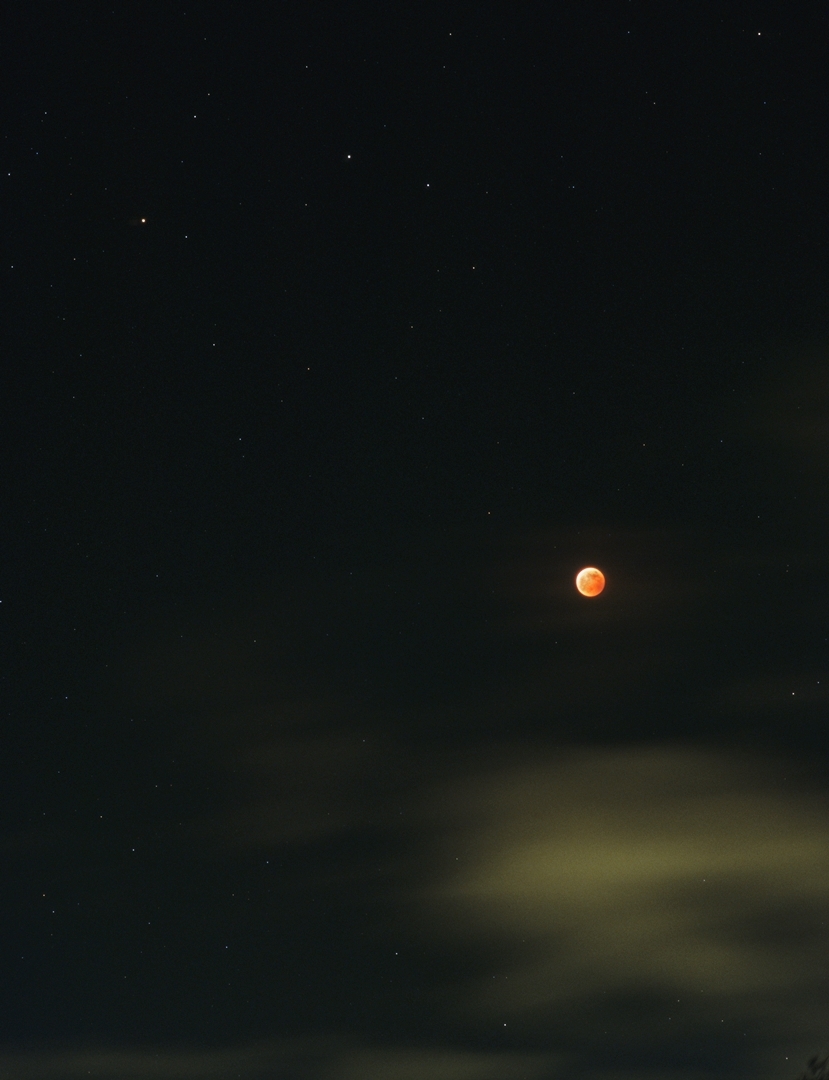
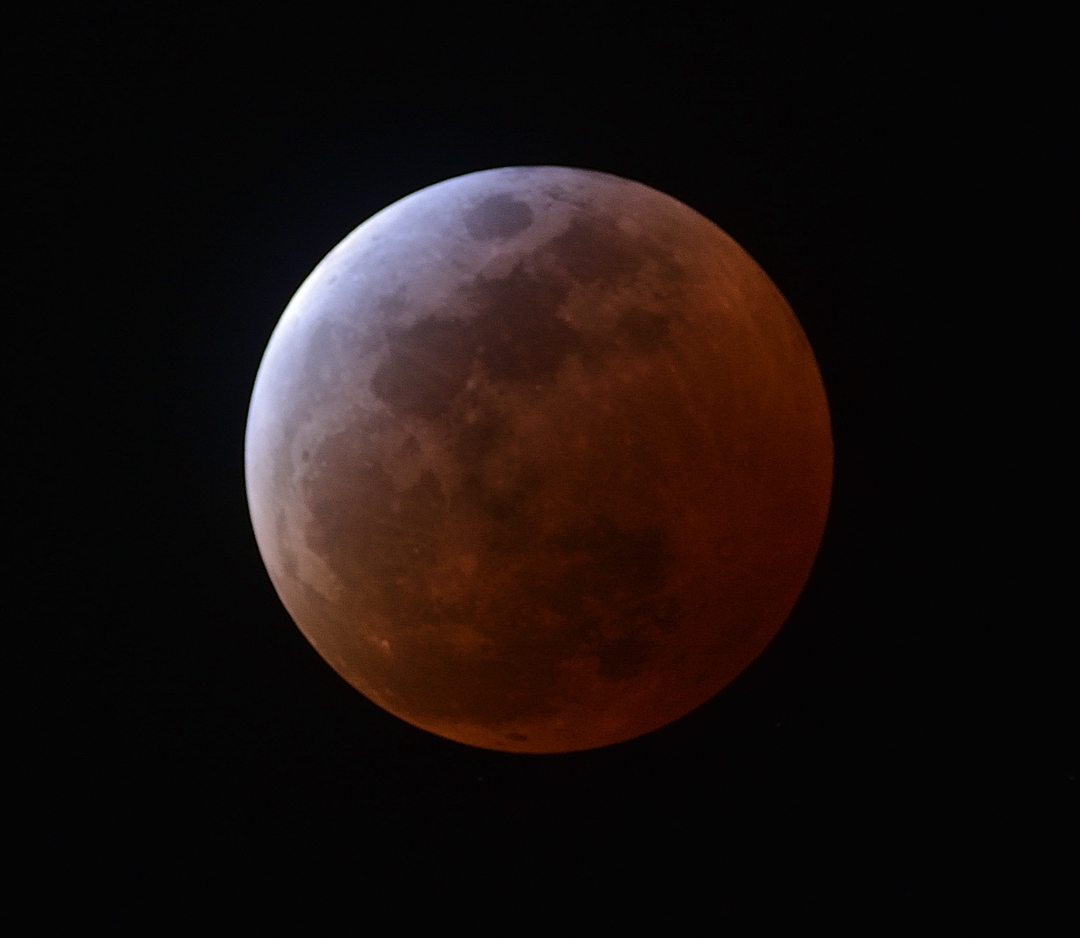
With just your eyes, you’ll see the Moon gradually darken, then take on a coppery red hue during totality. This is often the most satisfying way to watch the eclipse unfold naturally over time. A lunar eclipse is completely safe to view without eye protection, unlike a solar eclipse.
Binoculars
Binoculars are an excellent step up from naked-eye viewing. They make the Moon appear larger and bring out subtle details in the eclipse—like color variations across the lunar surface and the curved edge of Earth’s shadow. Tip: Using a tripod or binocular mount for larger binoculars makes a big difference in comfort and sharpness.
Telescope
A telescope offers the most detailed views, revealing lunar craters, mountain ranges, and delicate shading changes as the eclipse progresses. Even a small telescope provides a dramatic upgrade, especially during totality when contrast across the Moon is at its best.
- Any telescope will work, but smaller telescopes with an aperture between 60-120mm will work especially well
- Use low magnification so the entire Moon fits comfortably in the field of view
- Higher magnification isn’t necessary and can actually make the view less enjoyable
- Larger telescopes can also be used effectively, though many observers prefer low power to appreciate the full disk
An equatorial mount that tracks can also greatly enhance your experience.
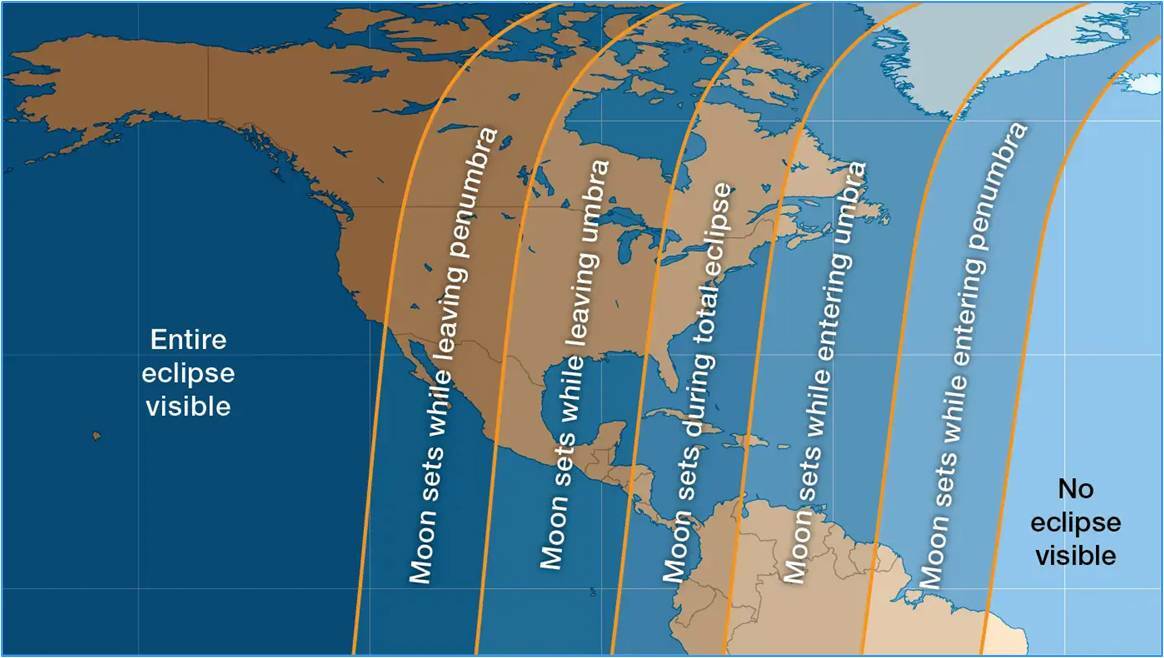
Choose a Location With a Clear Horizon, free of buildings, trees, or hills.
Photograph the Lunar Eclipse
A lunar eclipse is one of the most enjoyable night-sky events to photograph. The Moon is bright, moves slowly, and doesn’t require special filters—making it a great target whether you’re using a smartphone, a camera and lens, or a telescope. The key to all setups is stability and patience.
Smartphone Photography
Modern smartphones can capture a lunar eclipse surprisingly well, especially during totality when the Moon’s color is most dramatic.
- Use Night Mode or a dedicated astrophotography mode if available
- Brace your phone against a solid surface, or use a small tripod
- Avoid digital zoom; instead, crop later for better image quality
For best results, a smartphone-to-eyepiece adapter keeps the phone steady when attaching to a telescope.
Camera and Lens (Tripod Required)
A DSLR or mirrorless camera paired with a telephoto lens is a classic and flexible approach.
- Use a sturdy tripod—this matters more than lens focal ratio
- Start around 200–600 mm to frame the Moon comfortably
- During totality, try exposure times of 1–4 seconds at moderate ISO (400-600). Partial phases are much shorter exposures.
- Use an equatorial mount that tracks if possible to increase exposure length before blurring occurs
As the Moon darkens, you’ll need to increase exposure length. Don’t be afraid to experiment—totality lasts long time to get things right.
Telescope
A telescope offers the most dramatic close-up views of a lunar eclipse and works well with cameras or smartphones.
- Use low magnification so the entire Moon fits in the frame
- Track the Moon if possible, or re-center it every few minutes
- During totality, exposures of several seconds are common. Partial phases are much shorter exposures.
- Exposures can be longer if tracking, which enhances detail
- Dedicated astronomy cameras are not necessary
Almost any telescope can be used effectively. The most important factors are steady mounting, low power, and accurate focus.
No matter what gear you use:
- Focus carefully before totality, when the Moon is still bright
- Take photos throughout the eclipse—the color and contrast change noticeably
- Don’t forget to look up and enjoy it visually, not just at a screen
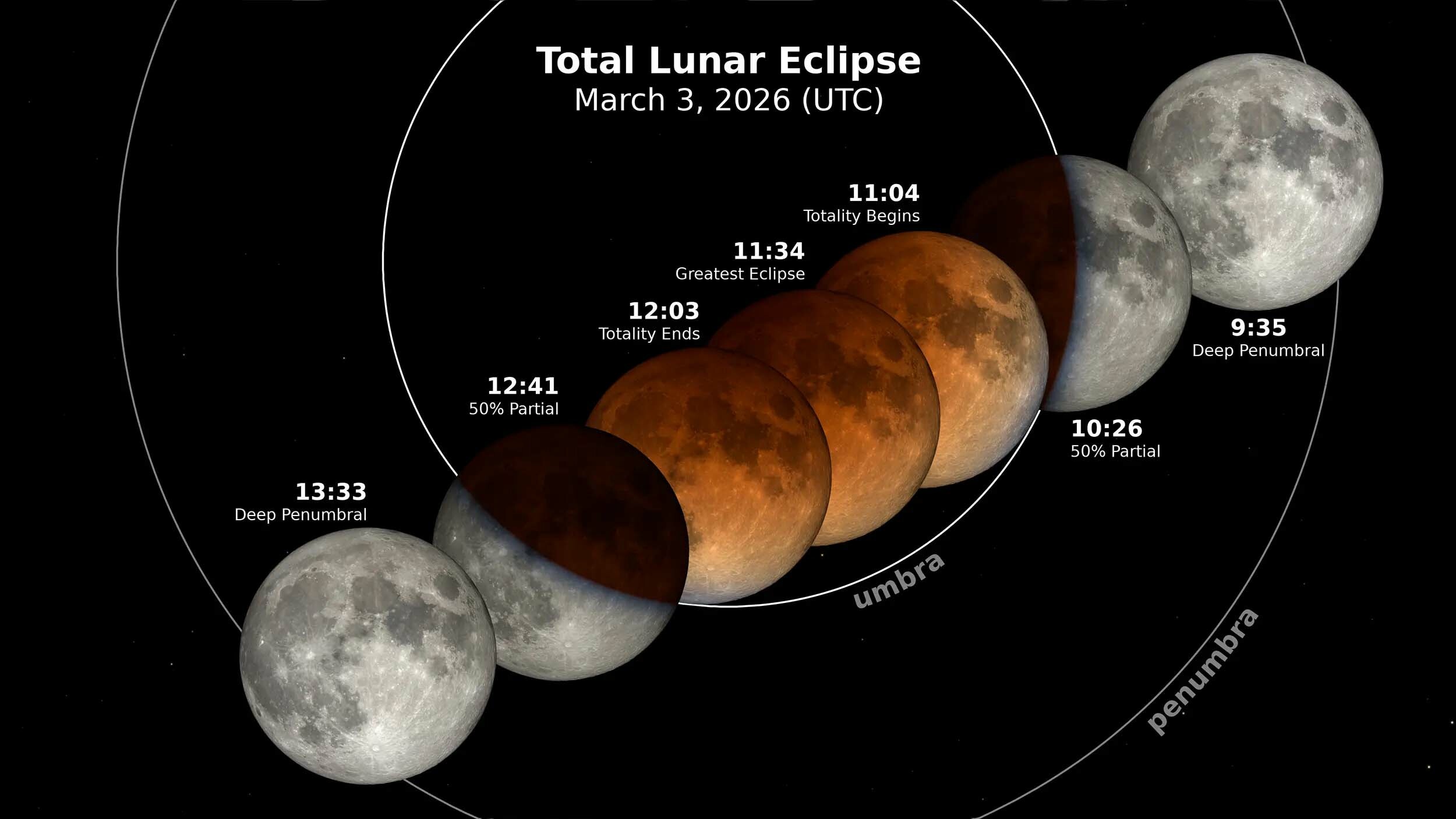
The times below are in Pacific Standard Time.
- 12:44 a.m. PT– Penumbral phase begins
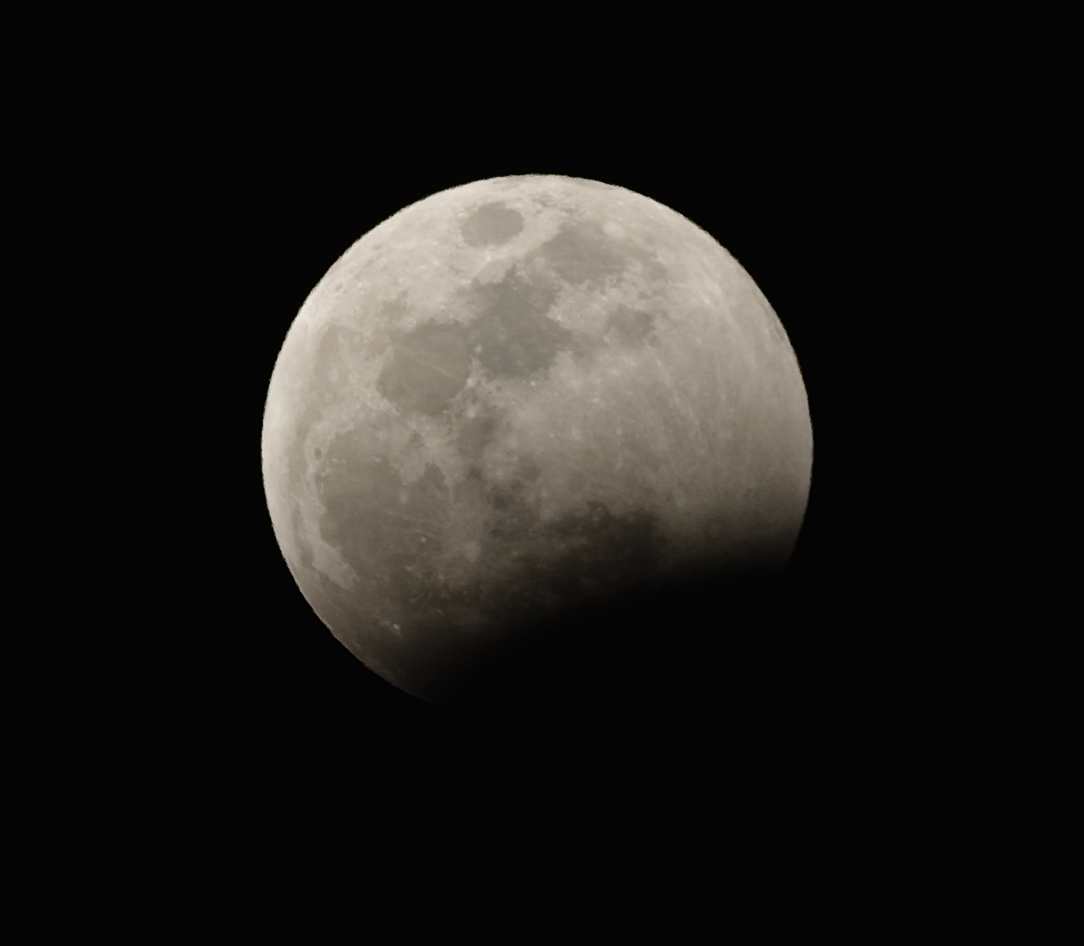
The Moon enters Earth’s penumbra, or outer shadow, beginning the eclipse. The Moon dims very slightly, but the change is subtle and easy to miss. - 1:50 a.m. PT– Partial eclipse begins (umbral phase)
The Moon starts moving into Earth’s umbra, the darker central shadow. A noticeable dark “bite” appears along the Moon’s edge. - 3:04 a.m. PT– Totality begins
The Moon is now fully inside Earth’s umbra. Sunlight filtering through Earth’s atmosphere gives the Moon a deep red or coppery color. This is the most dramatic part of the eclipse and a great time to use binoculars, a telescope or take photos - 4:03 a.m. PT– Totality ends
The Moon begins exiting the umbra. The red glow fades as brightness returns and a dark edge appears on the opposite side. - 5:17 a.m. PT– Partial eclipse ends
The Moon fully leaves Earth’s umbra. Only the faint penumbral shading remains. - 6:23 a.m. PT– Penumbral phase ends
The Moon exits Earth’s outer shadow and returns to normal brightness, concluding the eclipse.
Clear and Dark Skies, Dave Holland