Planets
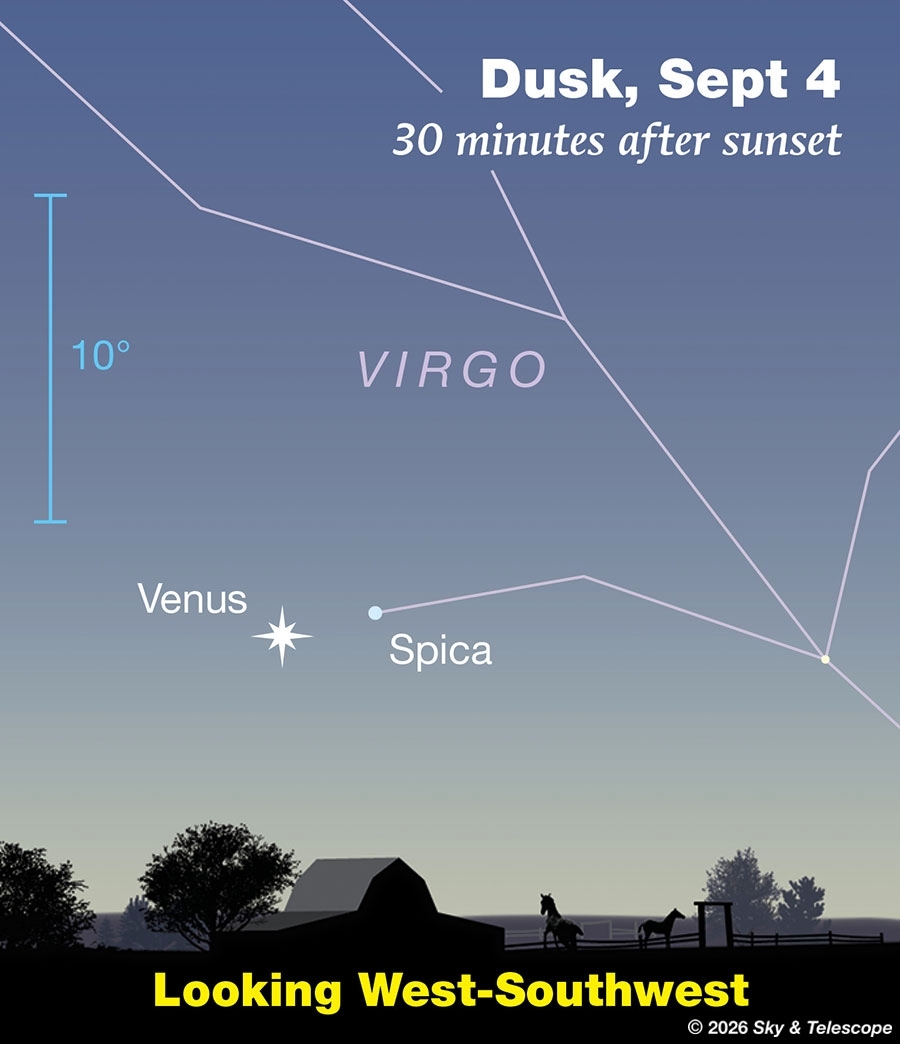
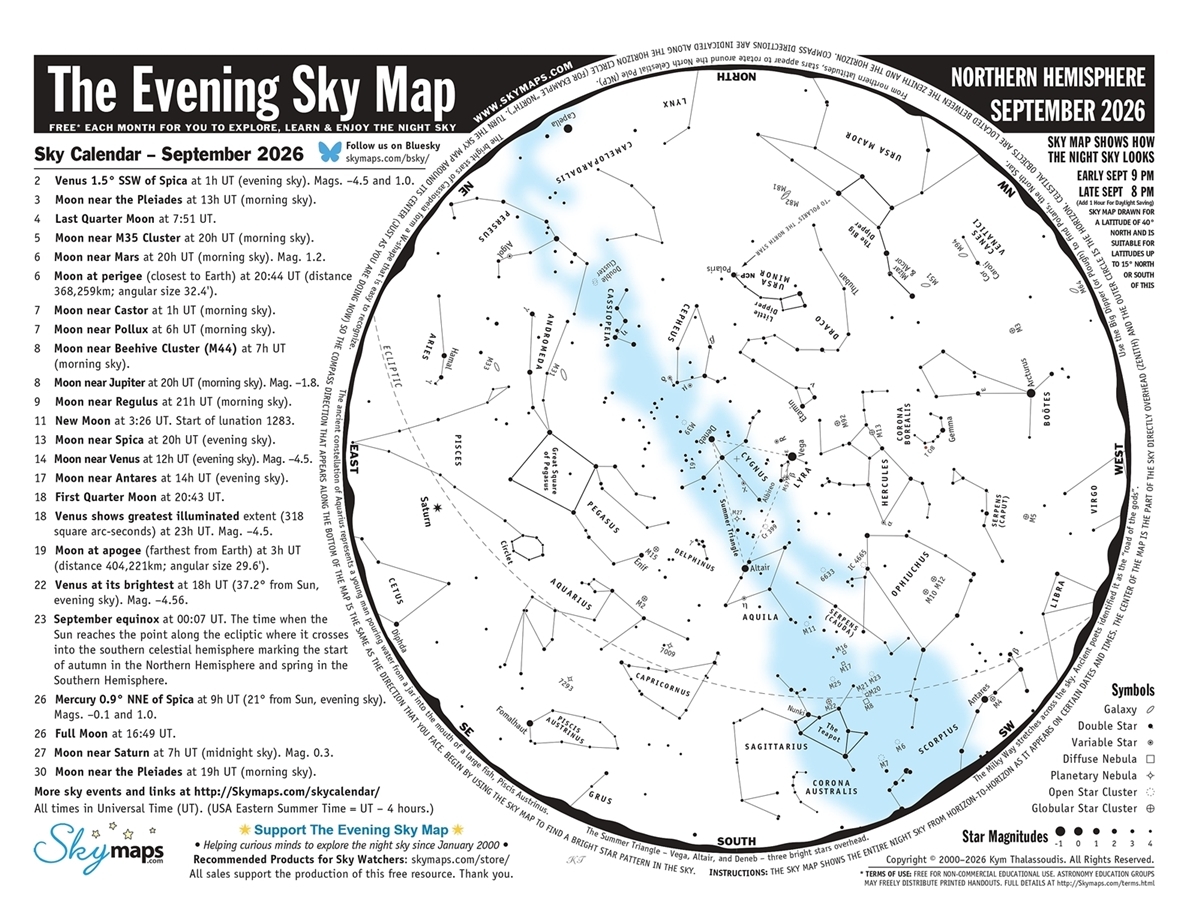
Venus: Reaches peak brilliance for this evening appearance on September 18, shining low in the west shortly after sunset
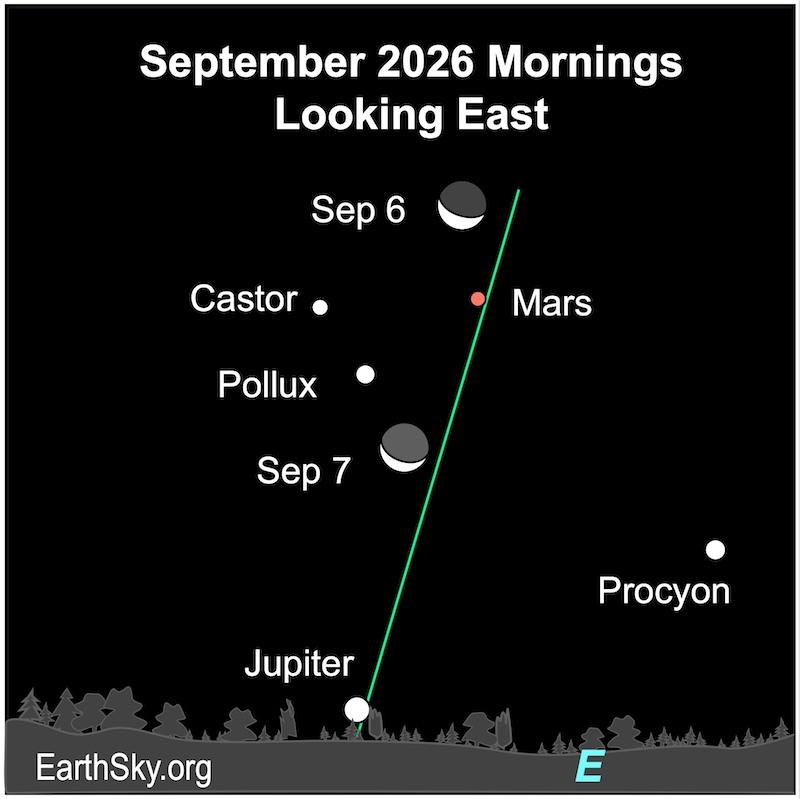
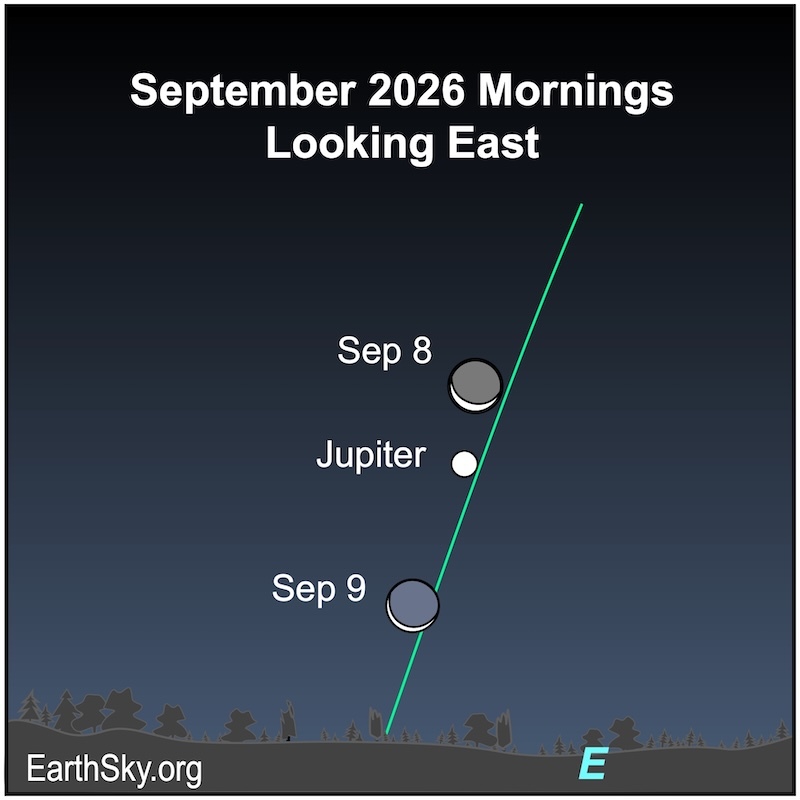
Jupiter: Appears in the morning sky and on September 8, a waning crescent moon will hang near the bright planet Jupiter. Look towards the east 60 to 90 minutes before sunrise
Mars: Rises during the early morning hours in the constellation Gemini, becoming visible past midnight as the month progresses
Saturn: Visible for much of the night, shining low in the eastern sky at dusk and pairing up with the Harvest Moon on September 26
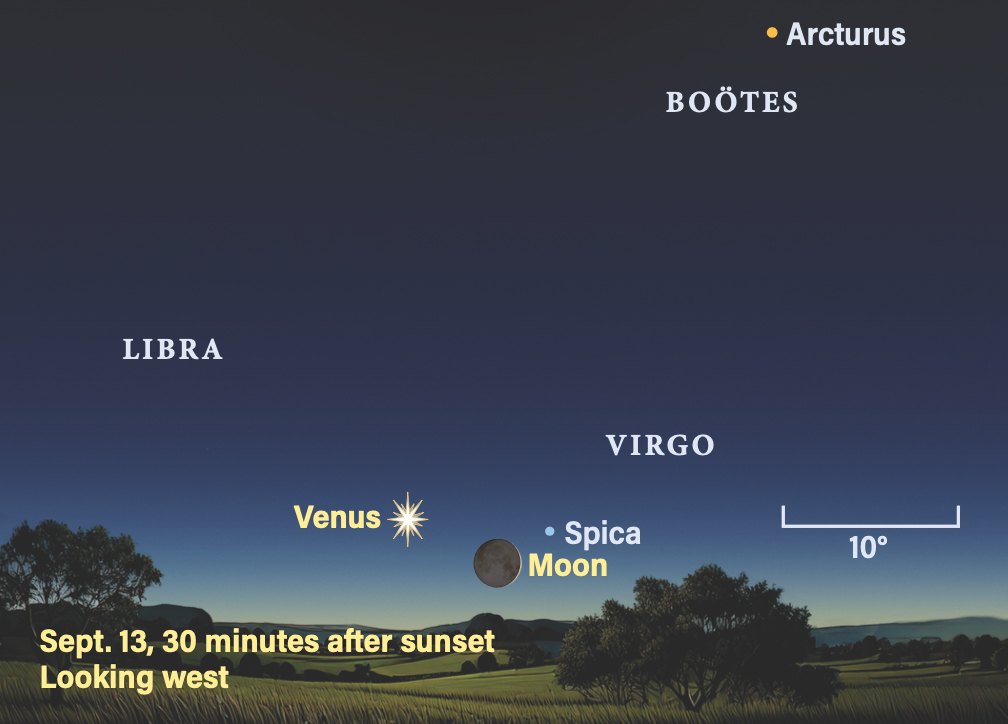
Venus and the crescent Moon sit briefly above the horizon after the Sun sets in mid-September. Spica, although shown, will likely require binoculars to spot this soon after sunset
Daytime Occultation: On September 8, the Moon will actually pass directly in front of (occult) Jupiter, but this specific alignment happens during daylight hours for most of North America, making the early morning pre-dawn proximity the best time for casual observers.
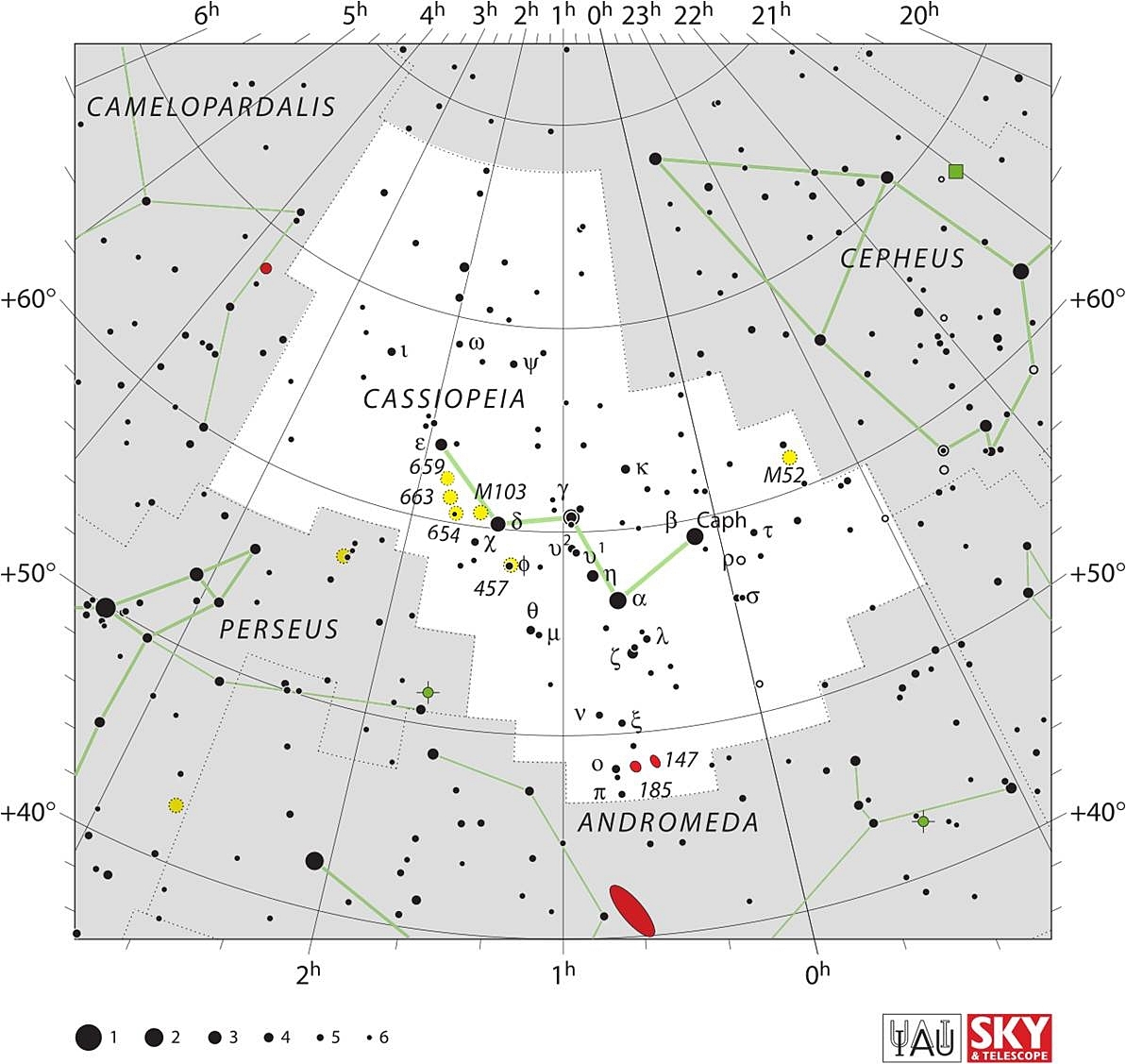
My pick of Open Clusters in Cassiopeia
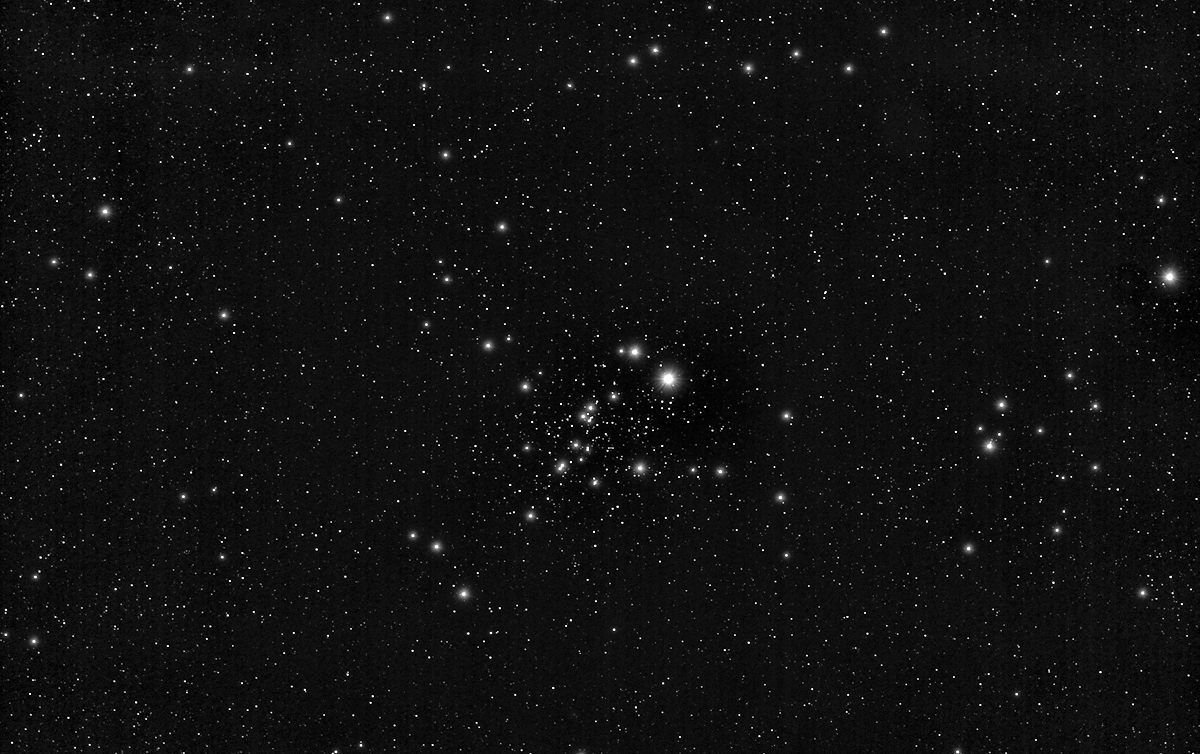
NGC 457 (The Owl Cluster): This is one of the most striking clusters in the night sky. It features two bright "eye" stars (including the orange supergiant Phi Cassiopeiae) with a long body and two outstretched chains of stars that make the or wings arms of an owl. It shines at magnitude 6.4 and is an easy target for small telescopes or binoculars
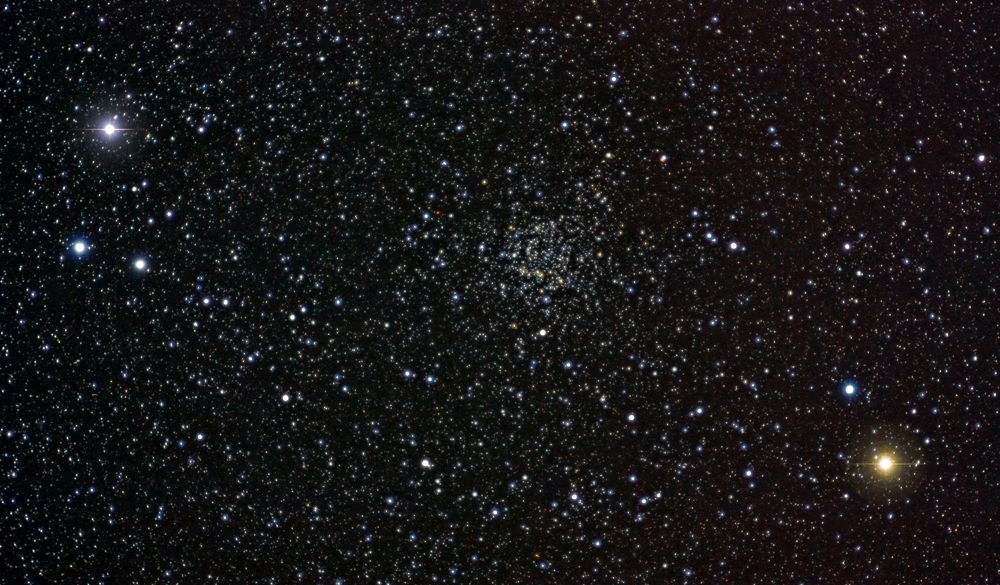
NGC 7789: is a magnificent and rich open cluster containing hundreds of stars. At magnitude 6.7, it appears as a misty glow in binoculars and resolves into a breathtaking swarm of yellowish stars in a moderate sized telescope
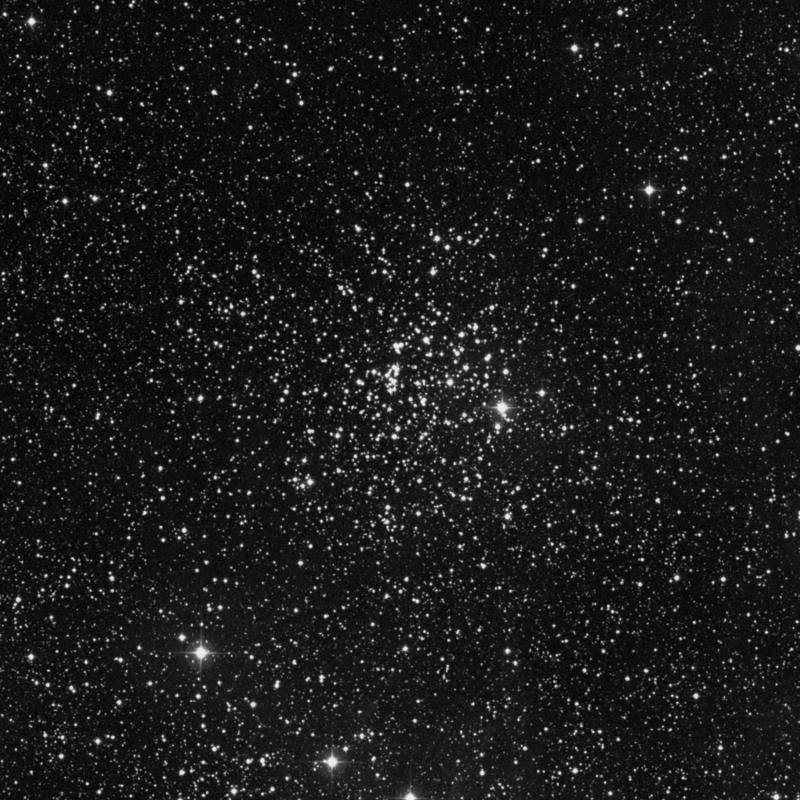
M52: is located near the western end of Cassiopeia’s "W" shape. M52 is a dense, rich cluster. It shines at magnitude 7.3 and presents a lovely fan-shaped arrangement of stars framed by a rich Milky Way background
M103: is a compact and distinct open cluster shaped like the head of an arrow or a triangle. Shining at magnitude 7.4 near the star Ruchbah and is easily spotted with binoculars or small scopes and includes the bright double star Struve 131 in the northwest of the cluster. Its two stars are mags. 7.2 and 9.8 and about 14" apart
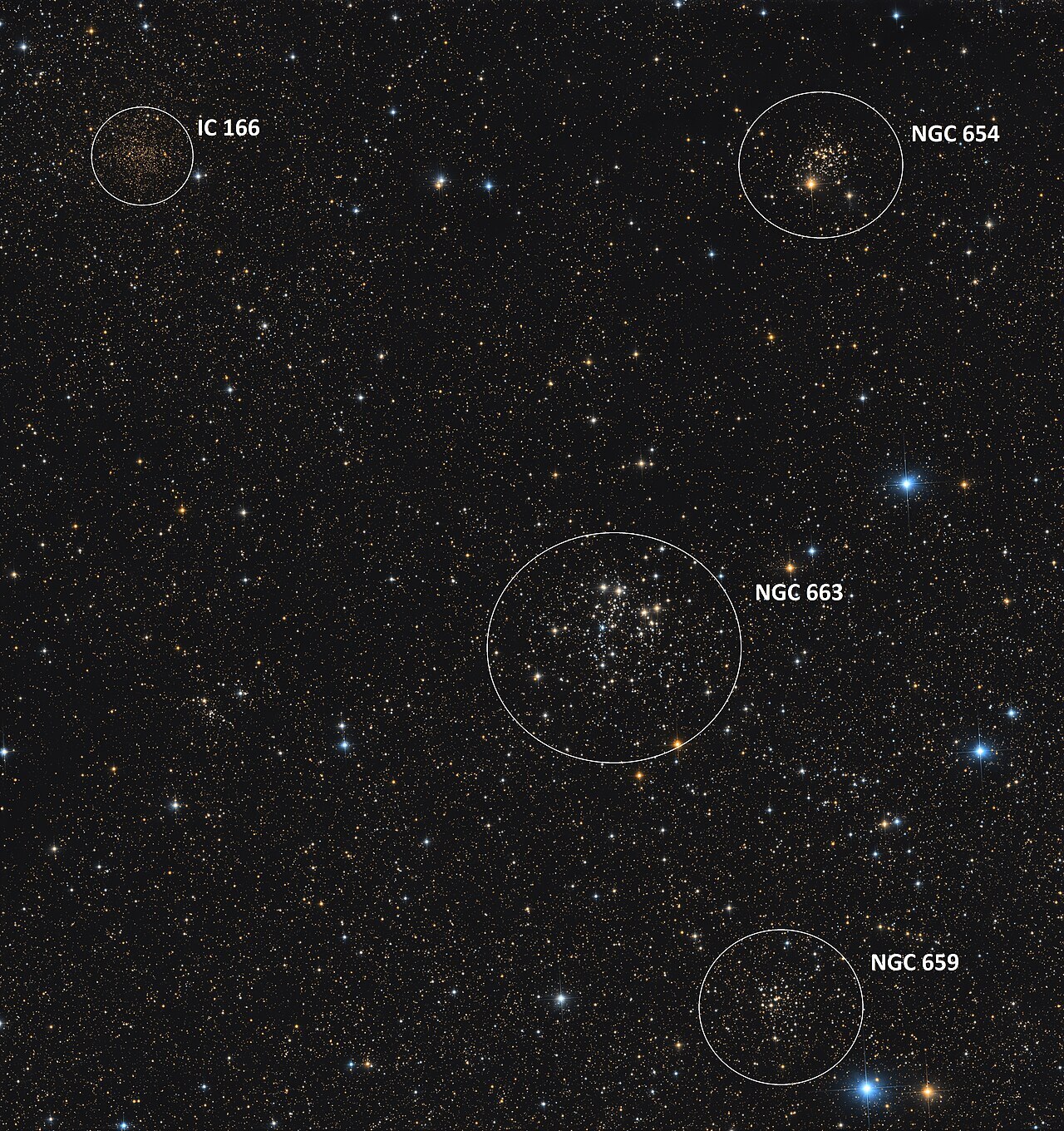
NGC 663: is a large, bright open cluster rich in 8th and 9th magnitude stars. Shining at mag. 7.1 it spans about 15' across and includes the open clusters NGC 654 and NGC 659 in a low power binocular field of view
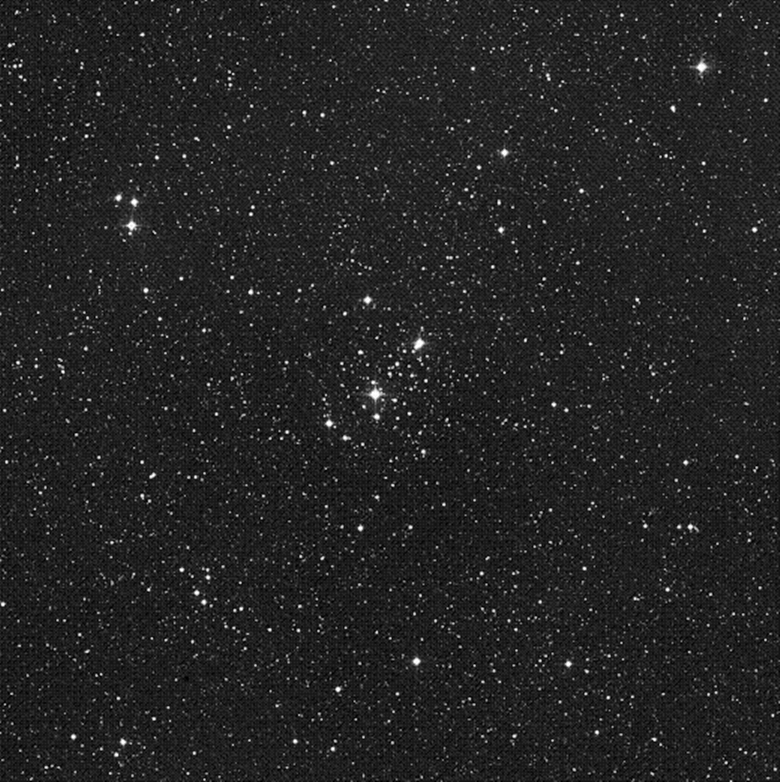
NGC 654 is a small (6' diam) open cluster of large starssurrounding a 7th magnitude yellowish star. At an apparent magnitude 6.5, it can be observed by binoculars. In a low power field can also be seen the open clusters NGC 663 and NGC 659.
NGC 659, an open cluster with an apparent magnitude of 7.9 that might need a little more magnification to resolve. It is located in the sky almost next to NGC 663
Clear and Dark Skies, Dave Holland