Autumn has fully arrived in the Northern Hemisphere, bringing with it stunning celestial views that are perfect for stargazers to enjoy.
The iconic "Summer Triangle," formed by the brilliant stars Vega, Altair, and Deneb, is still prominently displayed in the night sky.
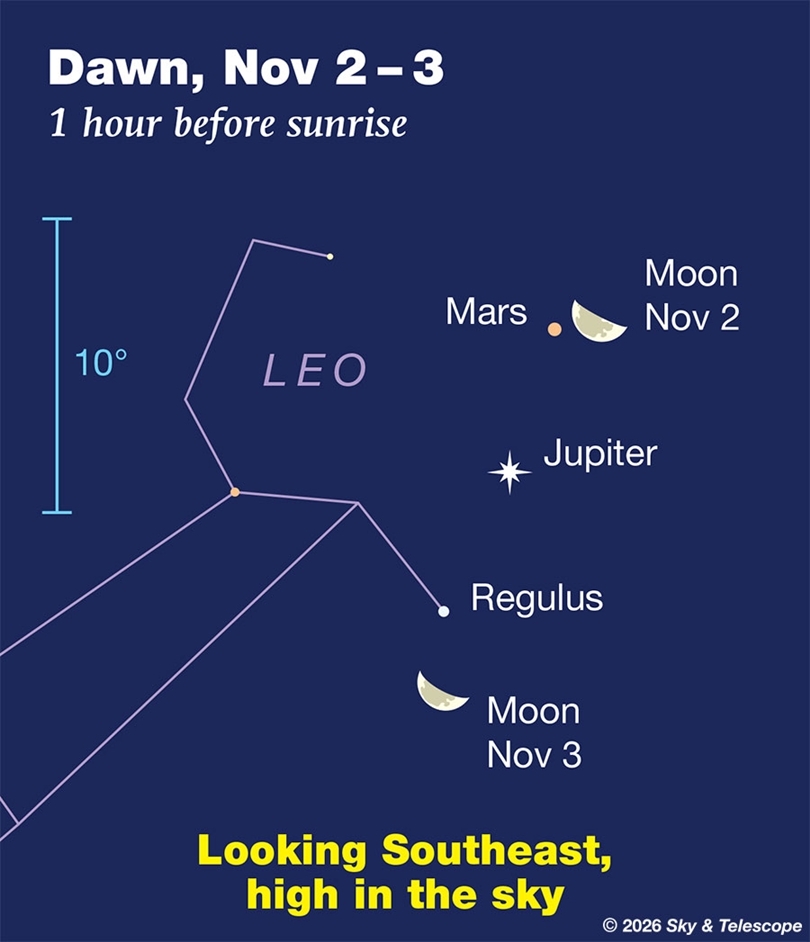
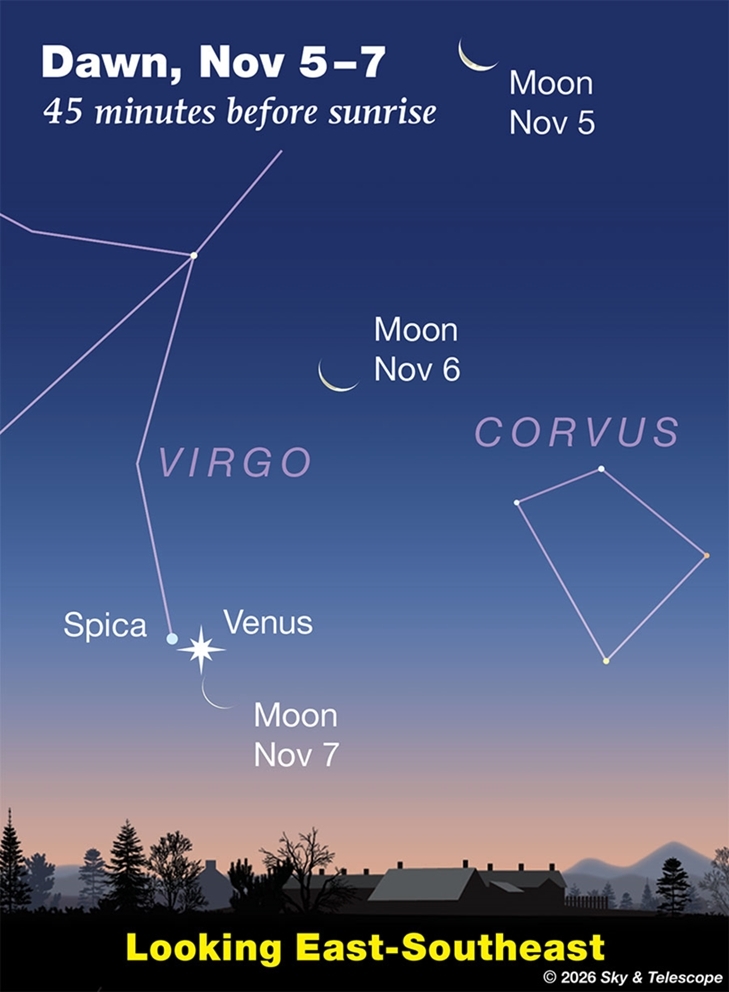
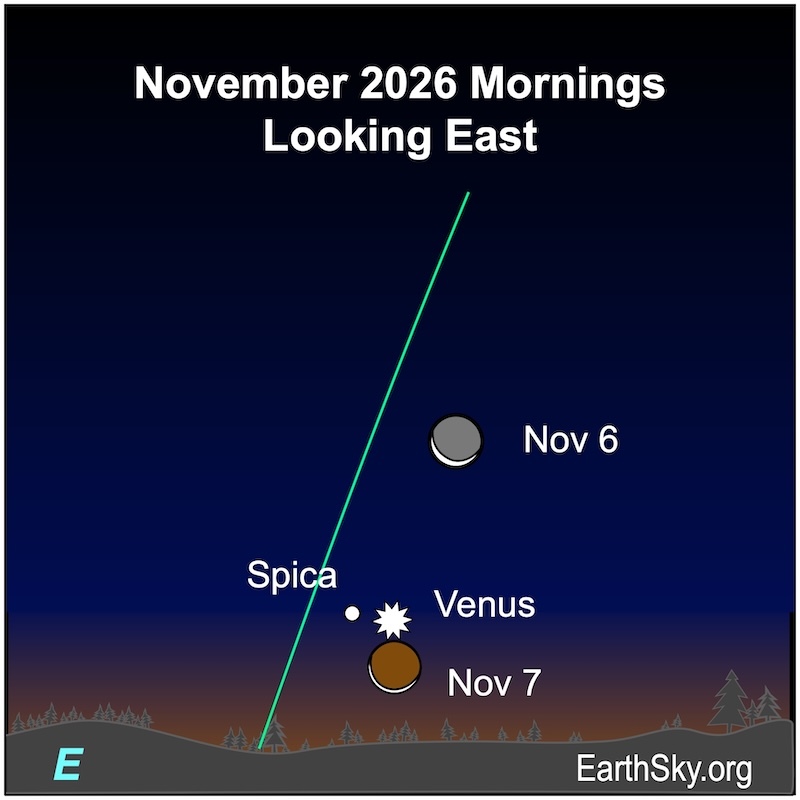
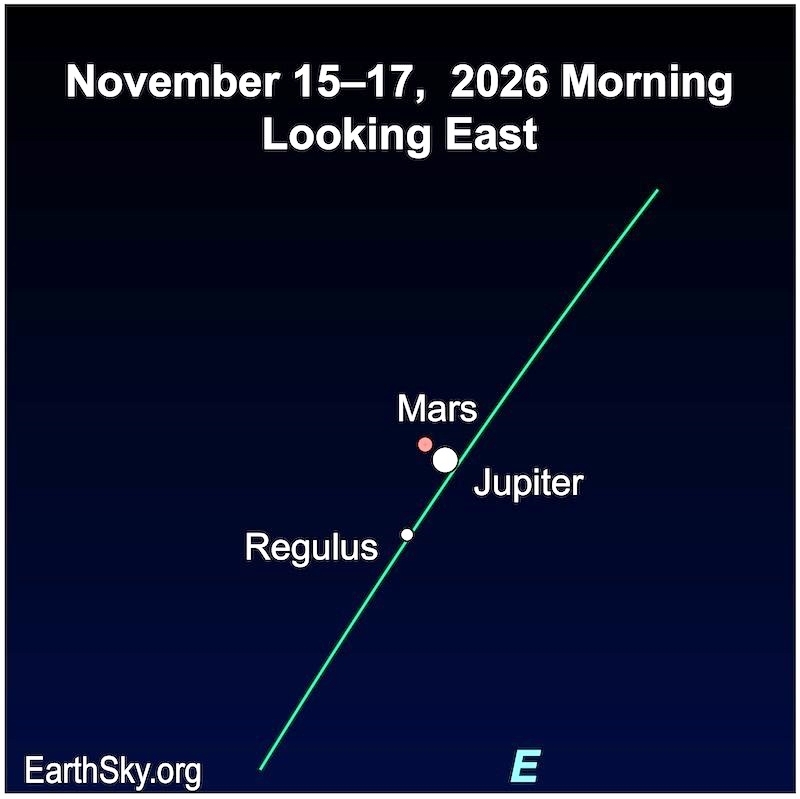
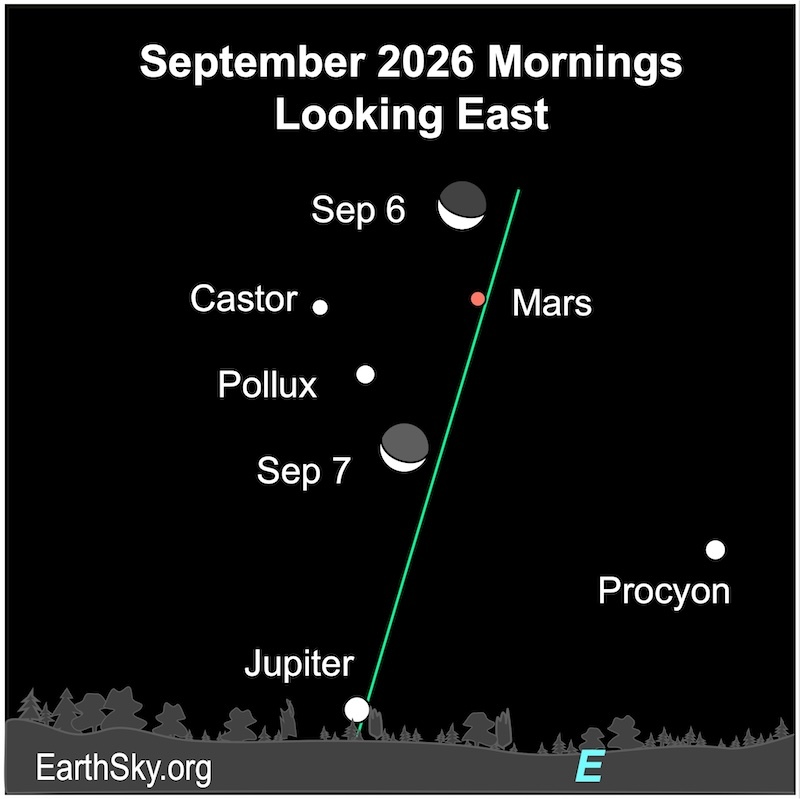
If you're an early riser, be sure to catch the waning Moon nestled below the lineup of Mars, Jupiter, and Regulus in the early hours of Tuesday, the 3rd. Then on Saturday morning, the 7th, a delicate crescent Moon will join the scene, illuminated a mere 3% by the Sun.
Looking ahead, mark your calendars for November 30, 2026. The night and pre-dawn skies will offer a spectacular sight as the Moon, Jupiter, and Mars gather closely near the shining star Regulus in the constellation Leo.
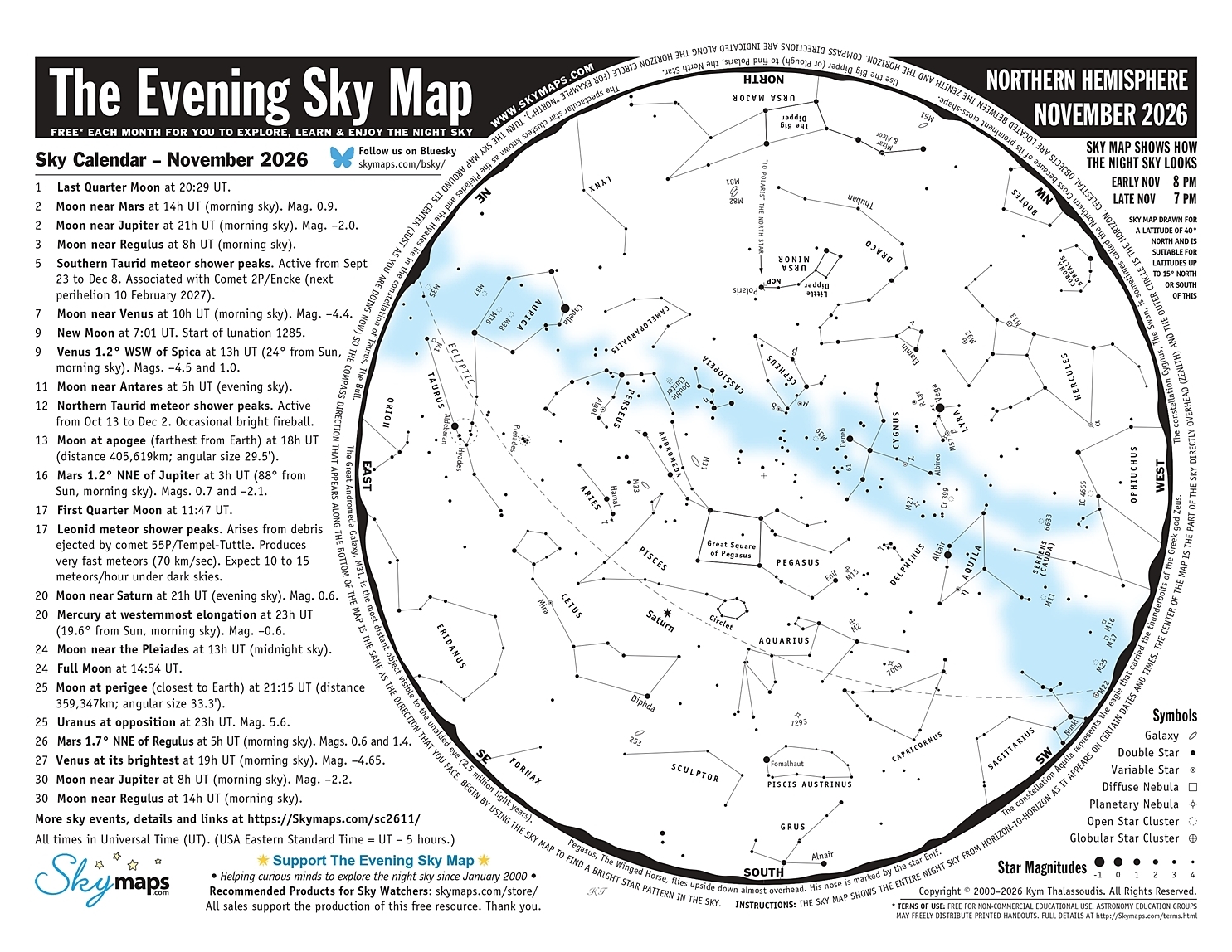
In the evening, Saturn (magnitude +0.5) can be seen shining brightly, having just passed opposition. As twilight settles, it will be the first point of light visible high in the east-southeast sky. Be careful not to confuse it with the fainter Fomalhaut (mag 1.2), which appears a few fists lower right of Saturn.
Meanwhile, Jupiter (magnitude –2.0) rises in the east-northeast shortly after Mars, though its visibility diminishes slightly each day. It's the brightest object in the early morning sky until Venus makes its appearance in the dawn, located about six fists at arm's length down to Jupiter's lower left. Keep in mind that even through a telescope, Jupiter appears only 35 arcseconds wide.
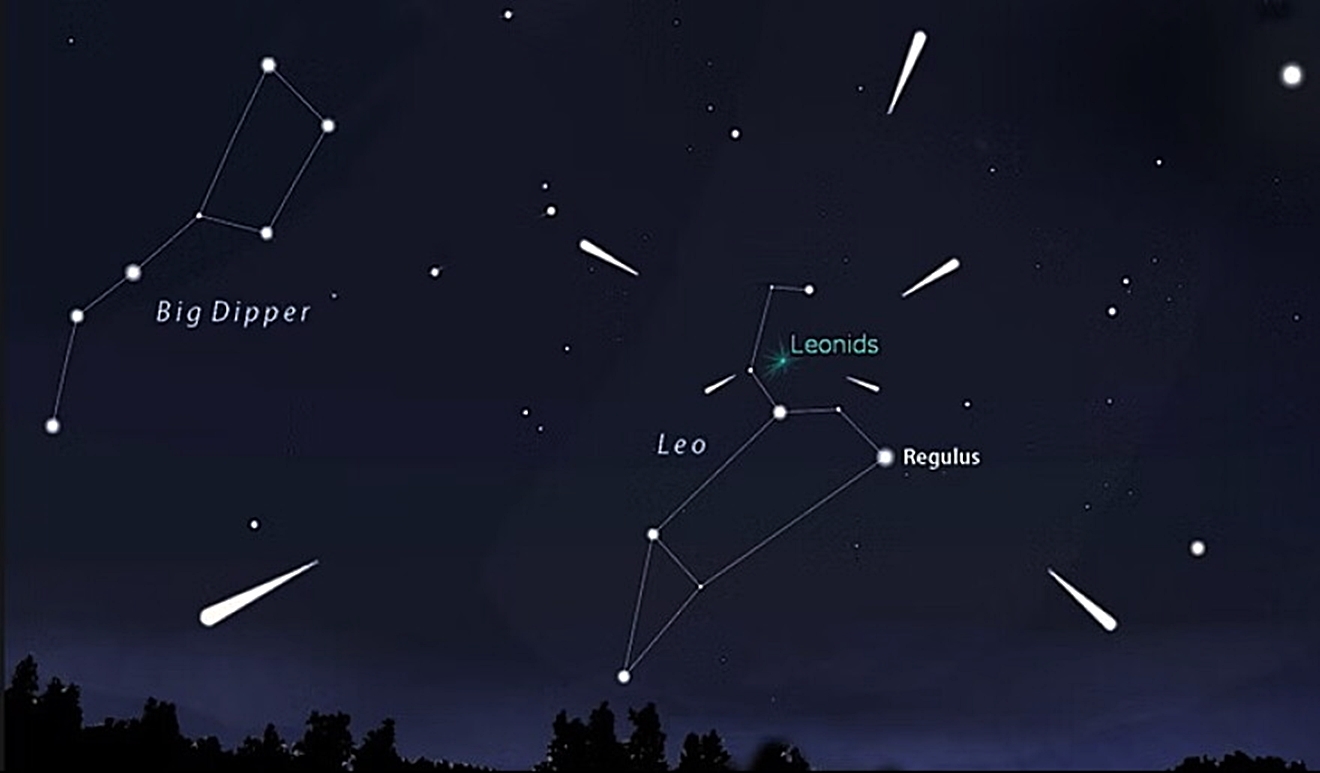
Finally, don’t miss the Leonid Meteor Shower peaking on November 17. Look for meteors after midnight on November 17 through to dawn on the 18th, with the radiant point rising around midnight and reaching its zenith by dawn
Clear and Dark Skies, Dave Holland