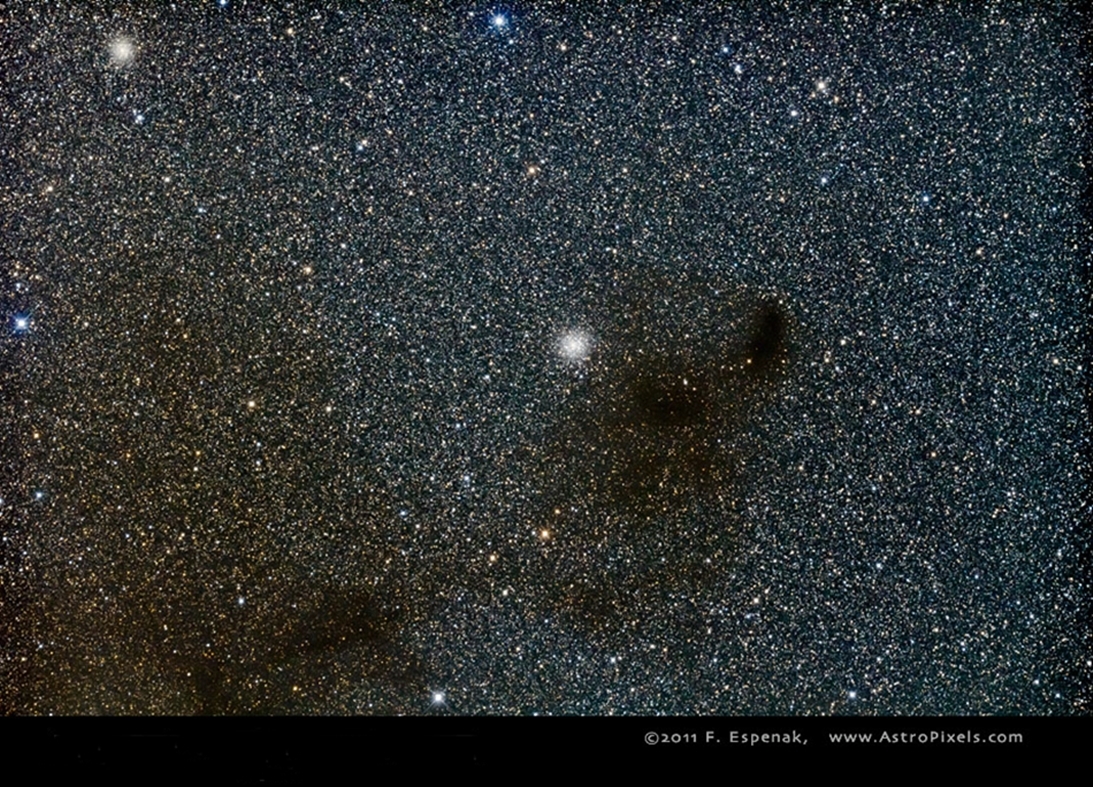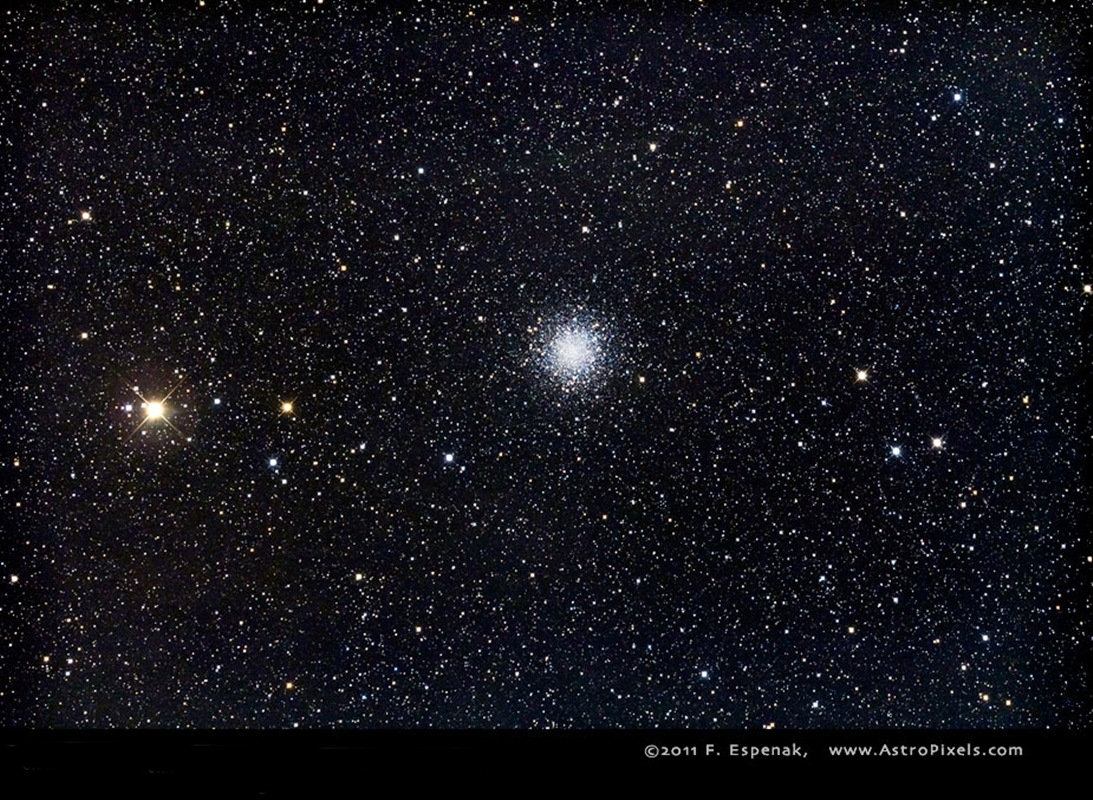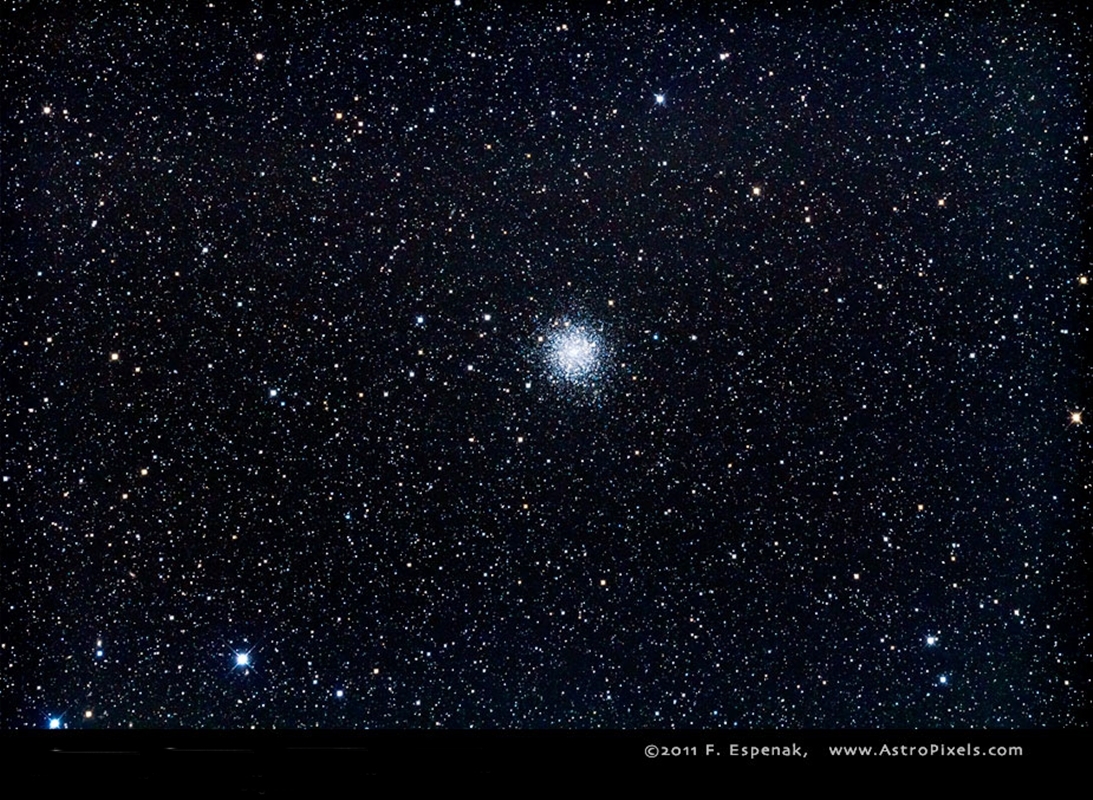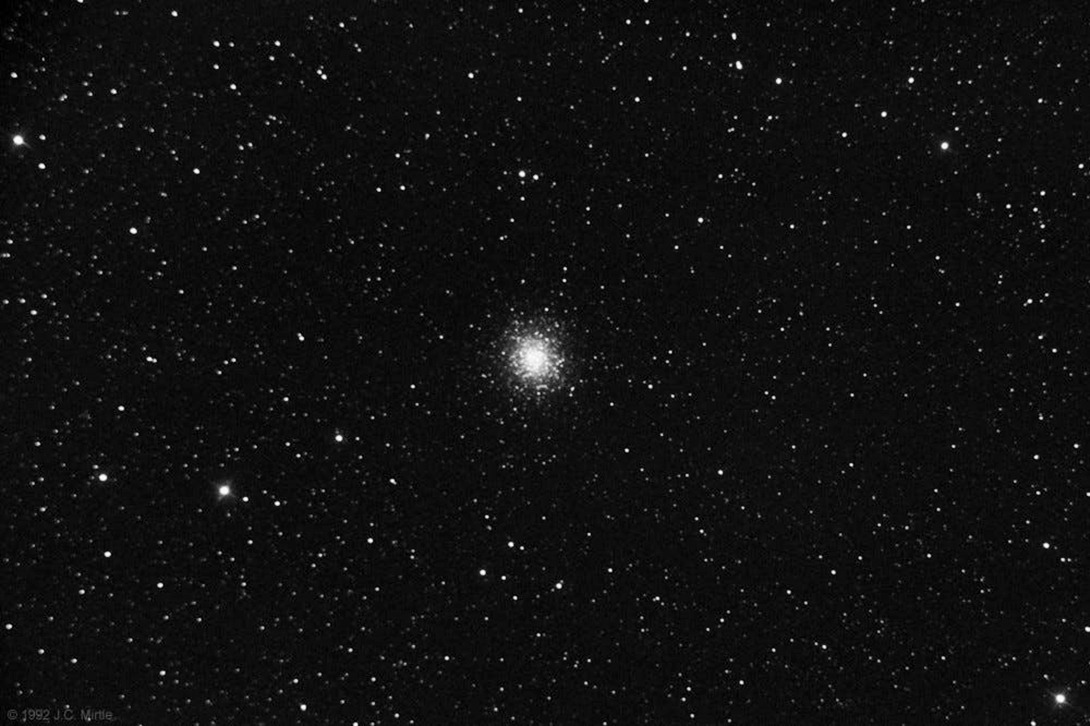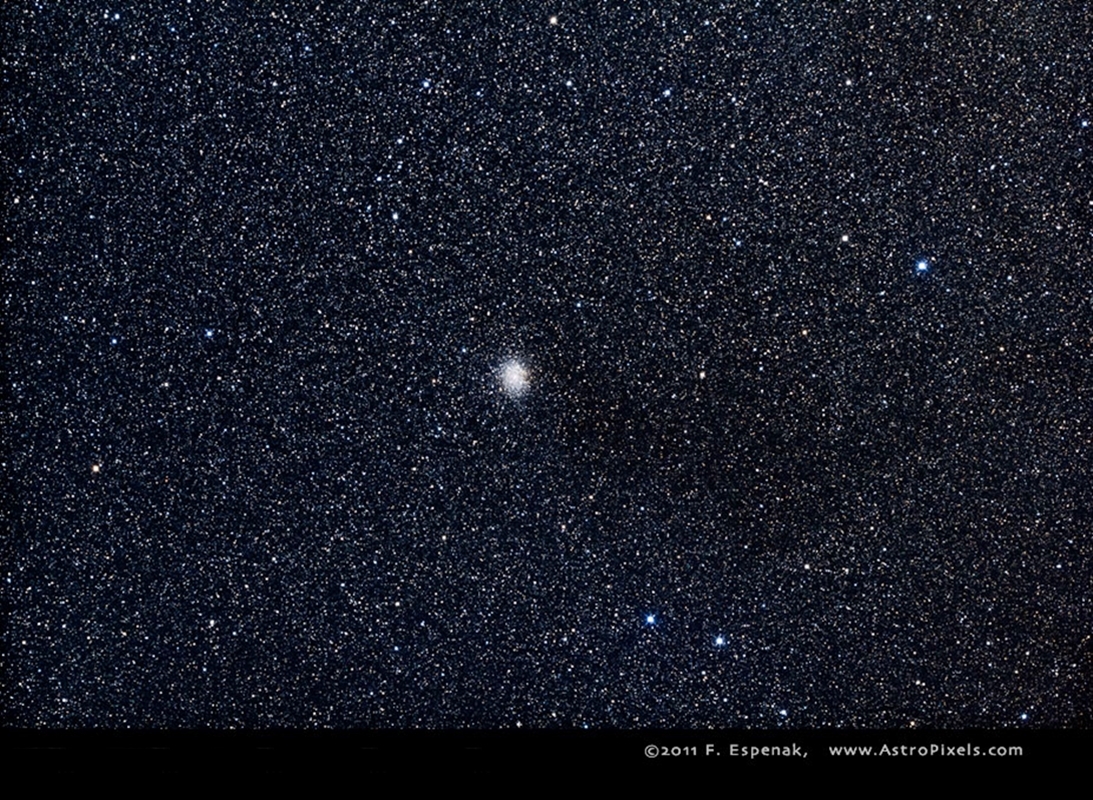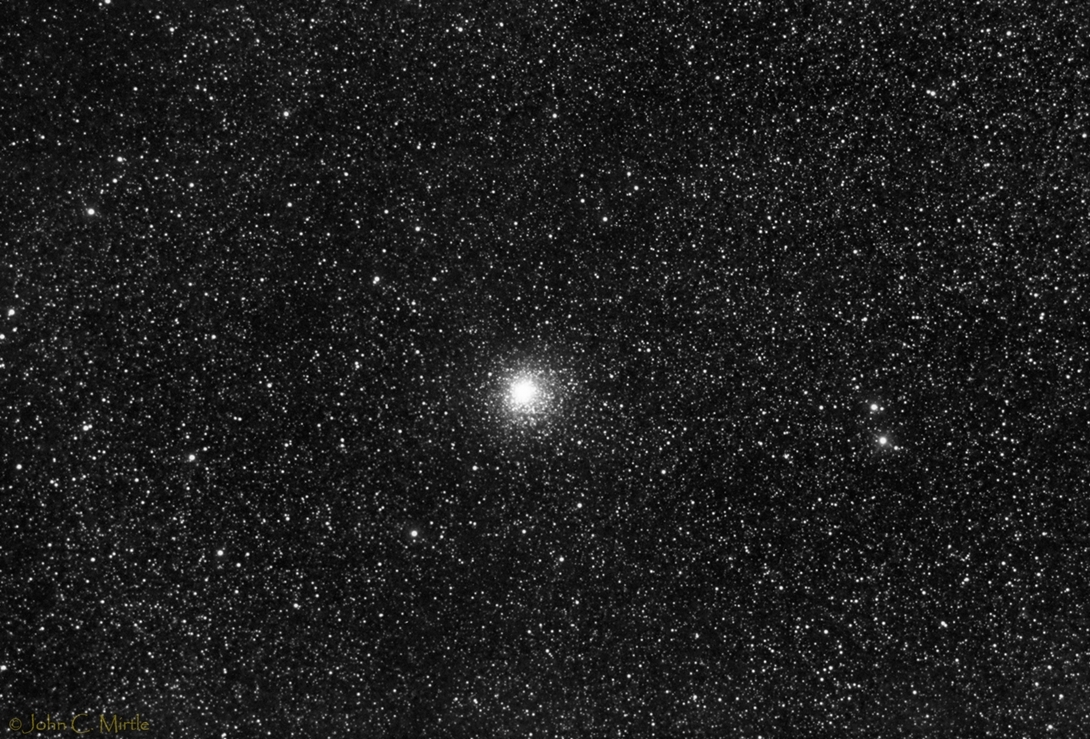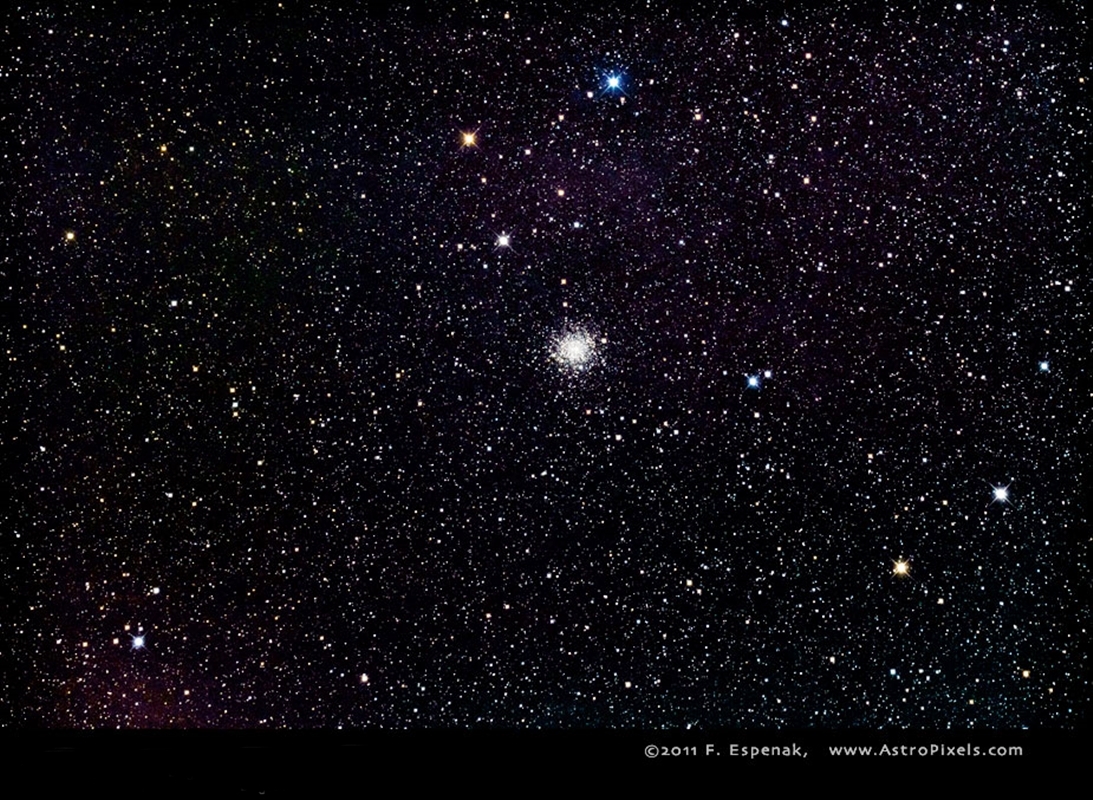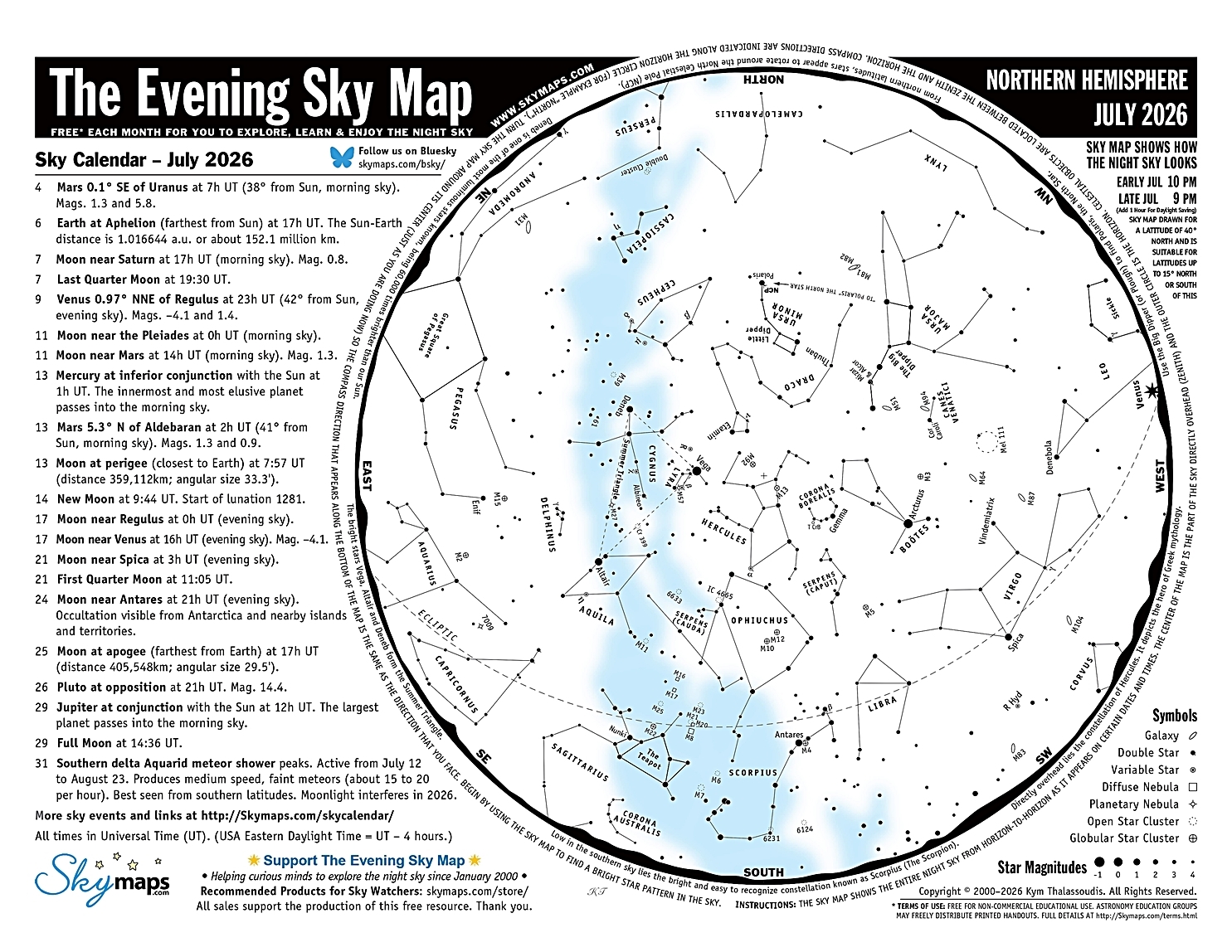
You may ask yourself what is a Globular Cluster? A Globular Cluster is a massive, spherically symmetrical collection of hundreds of thousands to millions of stars tightly bound by gravity. Orbiting the central bulges of galaxies, they are among the oldest known objects in the universe, typically containing ancient stars that formed nearly 10 to 13 billion years ago. Summer is the best time to observe these intriguing objects as they are numerous and centered around the center of the Milky Way. We will concentrate in the constellation of Ophiuchus, but other constellations like Sagittarius and Scorpius contain many more examples of these objects. A medium sized telescope is best but all below can be seen in a 6 in scope.
M9 is a bright, dense, oval-shaped globular cluster with apparent magnitude of 7.9. With an angular size of 9.3′ It is one of the closest globular clusters to the Milky Way's nucleus, and can be viewed with a small telescope.
M10 is a very bright and large loose globular star cluster shining at mag. 6.4 with a angular size of 20.0′. Viewed through medium sized telescopes it appears about half that size. Easily found just 1° west of the star 30 Ophiuchi.
M12 is a another very bright globular cluster. It has an apparent visual magnitude of 6.7 and its angular diameter is 14.5 arc-minutes. In a dark site this cluster can be faintly seen with a pair of binoculars. M12 is roughly 3° northwest from the cluster M10.
M14 At an apparent magnitude of 7.6 it can be easily observed with binoculars but a medium sized telescope will show some hint of the individual stars of which the brightest is of magnitude 14.
M19 is another bright but unique globular cluster because it is the most elliptical or "flattened" globular cluster known. Shining at mag. 6.8 a 10" telescope is needed to see its oval shape. M9 is large measuring around 17.0′
M62 is a bright and dense, irregularly shaped globular star cluster. At mag. 6.5 it is seen as a small diffuse blob in binoculars. Almost as large as M19 at about 15.0′ in diameter a large telescope is needed to partially resolve the core.
M107 is a very loose globular cluster close to the celestial equator. Even at mag 8 the core is easily resolved even in a modest sized telescope despite its 10′ size. Look a little more than 2° south from ζ (Zeta) Ophiuchi.
NGC6366 has an apparent diameter of about 13′ and is a popular but sometimes challenging object due to it being at mag. 9.5. Located very near 47 Ophiuchi (mag. 4.5) at only 15′ with both appearing in the same field of view. A large Dob or SCT telescope is needed to resolve individual stars.
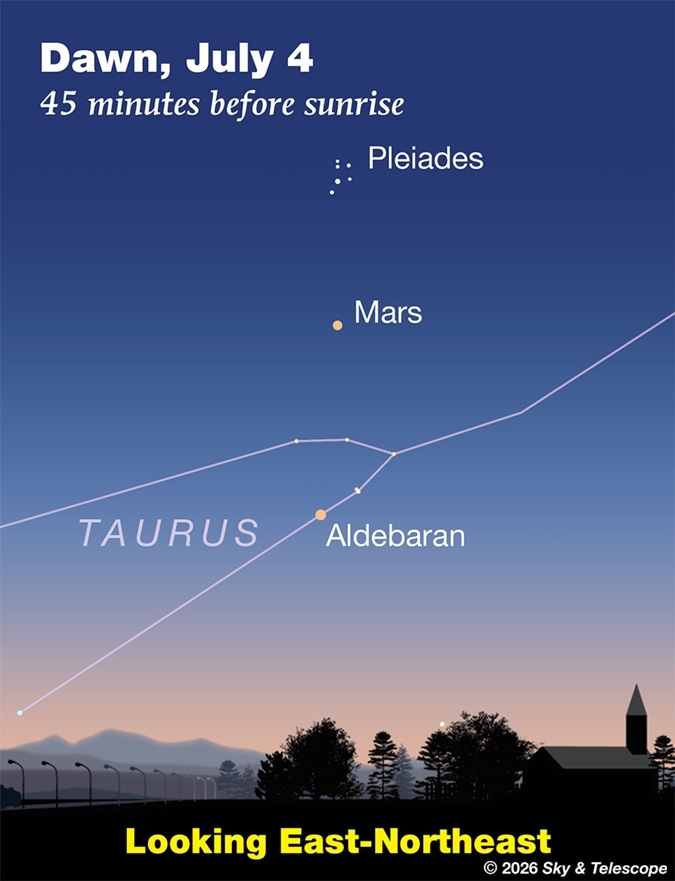
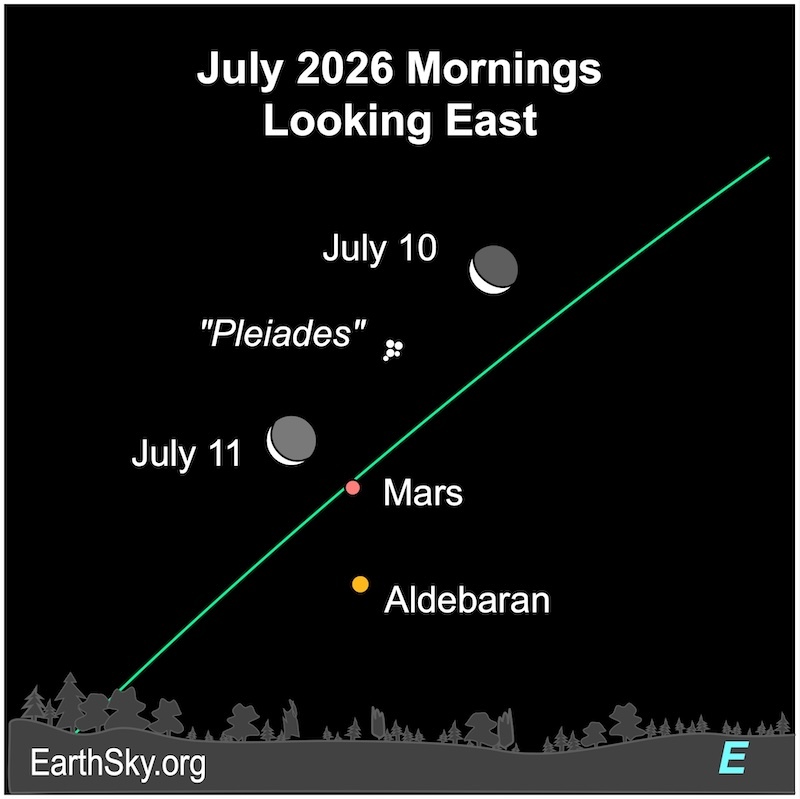
July 4 - Planetary Conjunctions: Mars on July 4th morning is 8° above Aldebaran, and 5½° below the Pleiades. Look 45 minutes before sunride in the east.
July 10 - 11 - Moon, Mars and the Pleiades: Look towards the eastern horizon 90 minutes before sunrise to see a crescent moon form a tight triangle with Mars and the Pleiades star (M45)
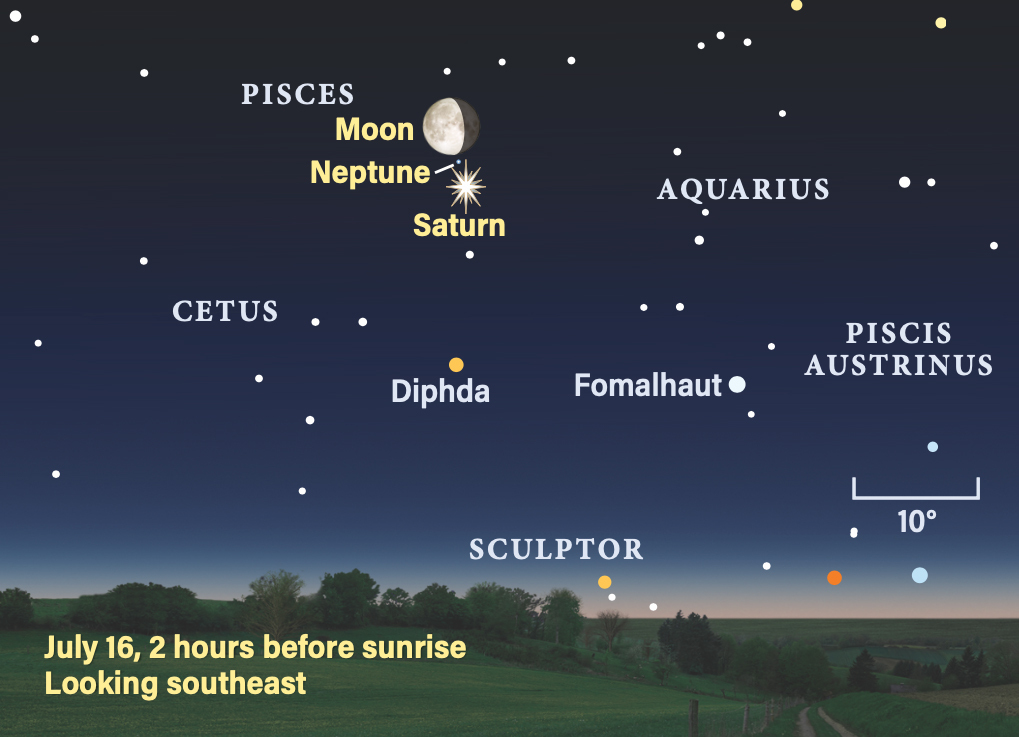
July 16 - The Moon will make a close pass by Saturn in the constellation Pisces and will be positioned just over 3° away. Also Neptune will be just 2° from the Moon but you will need a telescope to see it.
Clear and Dark Skies, Dave Holland